Late-Summer Pollinator Gap: How to Keep Bees and Butterflies Fed Until Fall
October 12, 2026 - Pollinators

October 08, 2026 - Meadow Care

October 01, 2026 - Wildflowers
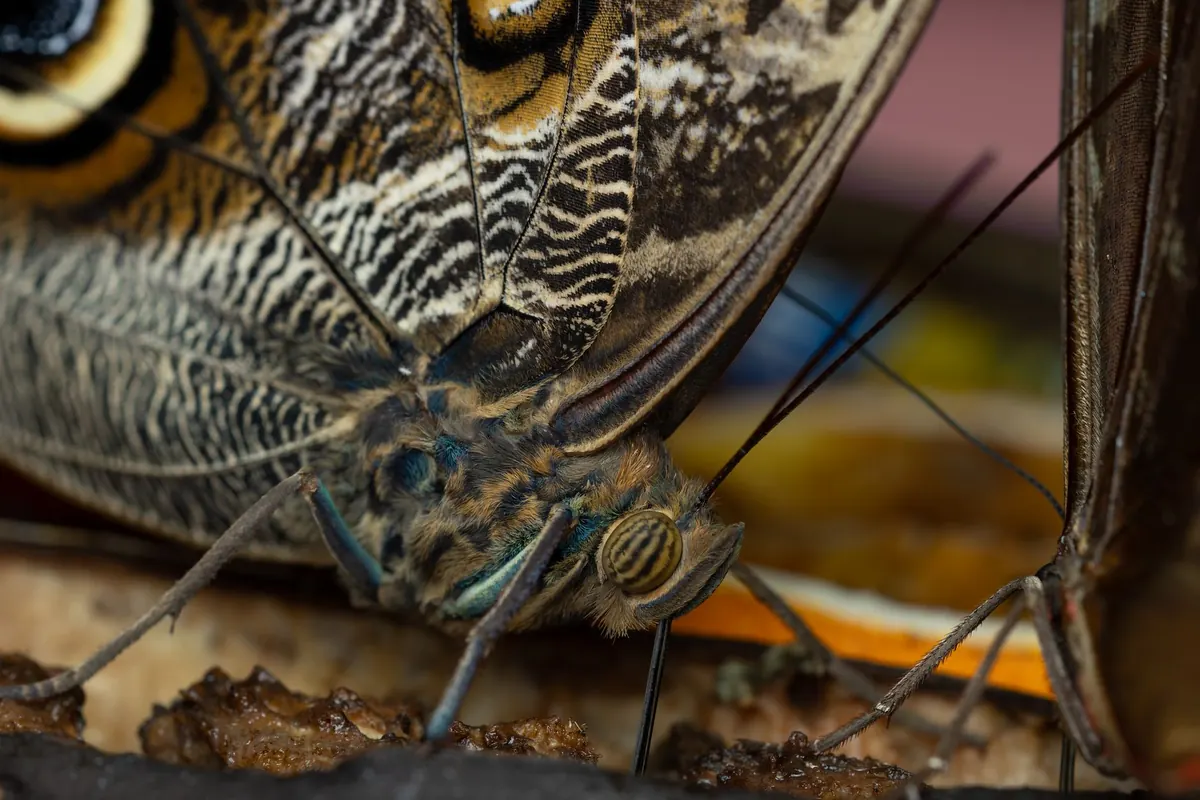
A meadow in July is loud with wings, and plenty of them refuse to sort themselves neatly. A small brown insect lifts off the grass, lands on knapweed, folds its wings flat and stays there. Butterfly or moth? No single feature settles it — but three or four together usually do. What follows is the order that saves the most time in the field, plus the exceptions that will keep you humble.
The fastest clue sits on the head, and it works at arm's length when the light is decent. Butterfly antennae are thin and finish in a small knob or club; with a little practice you can see that tiny swelling with the naked eye. Most moth antennae taper to a fine point, and many are feathery, comb-like or thick with scales, particularly on males.
Check the antennae before anything else. An insect resting with wings held flat might still be a butterfly, but if the antennae end in clubs, you can stop guessing. Photograph from the side when you can: antennae vanish into a bright background, and a silhouette against a leaf is often all you need later.
Color is the least reliable test in a meadow. Plenty of butterflies are brown, grey or plain; plenty of moths are scarlet, pink, gold or metallic. Photographers love the showy ones, which is why so many people assume moths are dull.
Posture is better evidence. Most butterflies settle with their wings closed and held vertically above the back, showing the underside to anyone looking on. Most moths rest with the wings laid flat over the abdomen or folded into a shallow tent. Watch an insect for a few seconds after it lands: if it becomes a neat triangle of wing that hides the body, lean moth. If it becomes a single upright sail, lean butterfly.
Wing texture and shape add detail. Moth wings often look powdery or velvety, with dense scaling you can almost feel from a step away, and they tend to be broad relative to the body. Butterfly wings look crisper, and the forewing and hindwing usually move together as one surface when the insect basks.
A butterfly's body is slim, with an abdomen not much thicker than a pencil. Moths are built heavier: broad thorax, furred shoulders, an abdomen that looks stuffed. That bulk is part of why they can fly in cooler air, and why they so often look like tiny bears with wings.
Flight style follows the same split. Butterfly flight is loose and fluttering, a little improvised, and it rarely holds a straight line for long. Moth flight is usually faster, straighter and more deliberate, often with a whir you can hear as the insect passes. Day-flying hawk-moths hover at flowers and hold a fixed position, something few butterflies manage for more than a heartbeat.
Most butterflies fly by day. Most moths fly after dark. In a sunny meadow that one observation resolves a good half of your identifications before you get close — but it fails often enough to be dangerous on its own. Several moths are strictly daytime creatures:
Meanwhile some butterflies prefer the softer light of late afternoon, and a few can be flushed at dusk. Use the clock as supporting evidence, never as a verdict, and note the hour on your records anyway. It makes them comparable with everyone else's.
Life stages look tidier than adults, though not perfectly. Butterfly caterpillars are usually smooth or finely haired, and they feed openly on a specific host plant — nettles, grasses, violets, clovers. Moth caterpillars are more often densely furry or oddly shaped, and many hide by day in rolled leaves, silk webbing or the litter at the base of the plant.
Pupae split along the same rough line. Butterfly chrysalises usually hang exposed, fixed by a silk pad and often a girdle of silk. Moth pupae frequently sit inside a silk cocoon — but plenty, including many hawk-moths, pupate underground with no cocoon at all. A bare brown case in the soil is not automatically a moth, and a cocoon is not a guarantee.
Skippers cause most of the trouble. They have thick, moth-like bodies and dart away in fast, jerky bursts. Look at the antennae and you will find clubs, with a small hook at the tip — so treat them as butterflies unless you have a reason not to.
Burnet moths carry clubbed antennae, which amounts to a moth dressed in butterfly hardware. Other day-flying moths rest with their wings held upright, exactly the way a butterfly does. And plenty of small, plain butterflies look like nothing so much as a moth with a good tailor.
No single field mark settles the question. Stack three or four and the answer usually falls out.
Next time something lands in front of you, run this sequence. It takes less time than reading about it.Photo: Pi Pi / Pexels

Most gardens peak in June and again in September, leaving bees and butterflies hungry in between. Here's how...
Turn a balcony or patio into a working pollinator patch with the right containers, sun, plants, and watering routine...
Copyright © 2026 The Meadow Courier. All Right Reserved.