Late-Summer Pollinator Gap: How to Keep Bees and Butterflies Fed Until Fall
October 12, 2026 - Pollinators


October 08, 2026 - Meadow Care

October 01, 2026 - Wildflowers
You do not need an acre or a tractor. A patch of lawn three metres by four — room for a bench, small enough to watch closely — can hold ox-eye daisies, knapweed, field scabious and the bees that arrive with them. What it needs is a willingness to un-garden: to stop feeding the soil, to accept a little mess, and to mow at the right moment rather than the tidy moment. Get the groundwork right and a small meadow is easier to keep than a lawn. It is also a chance to see your garden as a habitat rather than a collection of beds. Start small, aim for a matrix of fine grasses and a dozen flower species, and let the patch teach you what wants to grow.
Before you order a single packet, spend a week looking at your patch. Most meadow flowers want full sun — at least six hours of direct light in midsummer. A narrow strip along a north-facing fence will struggle whatever you sow into it. Watch where the light falls at noon and again at four in the afternoon. A sunny edge beside a patio, a south-facing bank, or the open middle of a lawn are all better candidates than a shaded corner under a tree.
Then test the soil by hand. Squeeze a damp handful: if it moulds like plasticine it is clay; if it crumbles and trickles through your fingers it is sand or chalk. Clay suits knapweed, meadow buttercup and greater burnet. Lighter soils favour poppies, harebells and wild carrot. You can also read the ground by its weeds: nettles, docks and fat cock's-foot grass suggest fertile soil, while sheep's sorrel, tormentil and fine bent grasses suggest something thinner and more meadow-friendly.
Fertility matters as much as texture. Wildflowers come from ground nobody improved — thin, hungry, undisturbed. A lawn that has been fed for years, or an old vegetable bed, will grow rank grass and docks that smother everything else.
The aim is not to make the soil better. It is to make it poorer.
If your ground is rich, either strip the top five to ten centimetres and take it away, or include yellow rattle in your mix. Yellow rattle is a native annual that draws water and nutrients from grass roots and gradually weakens them, opening gaps for flowers. It is normally sown in autumn and needs winter cold to germinate. In a small patch, a pinch scattered through the seed mix can be enough; in a larger meadow, aim for about half a gram per square metre. Let it set seed in its first summer before you cut, or it will vanish as quickly as it arrived.
Scattering seed onto existing lawn is the most common way small meadows fail. Grass, dandelions and creeping buttercup will out-compete seedlings long before anything flowers. You need bare ground first. There are three workable routes:
Whichever route you choose, do not sow into a patch of couch grass, bindweed or ground elder. These perennials will laugh at your wildflowers. Dig them out, smother them for longer, or choose a different spot. Once the ground is bare, rake it to a fine, crumbly surface. Let it sit for a fortnight, remove any weed seedlings that appear, then rake again before sowing. That extra patience saves months of hand-weeding later.
For a small backyard meadow, buy a native perennial meadow mix rather than a cheap packet of annual cornfield flowers. Annuals such as cornflowers and poppies give a bright first summer, but they usually disappear. Perennials — ox-eye daisy, knapweed, field scabious, yarrow, selfheal, cowslip, meadow buttercup, birds-foot trefoil and red clover — return year after year. Fine grasses such as crested dog's-tail, red fescue and bent are not filler; they hold the meadow together, keep weeds down and give stems for insects to climb.
Match the mix to your soil. For clay, look for greater burnet, meadowsweet, ragged robin and devil's-bit scabious. For lighter, chalky ground, try wild carrot, small scabious, harebells and salad burnet. If you have a damp hollow, add ragged robin and meadowsweet; if the patch bakes dry, lean on wild carrot, bird's-foot trefoil and yarrow. A local supplier can often tell you which species are native to your area, and local provenance is better for insects and for establishment.
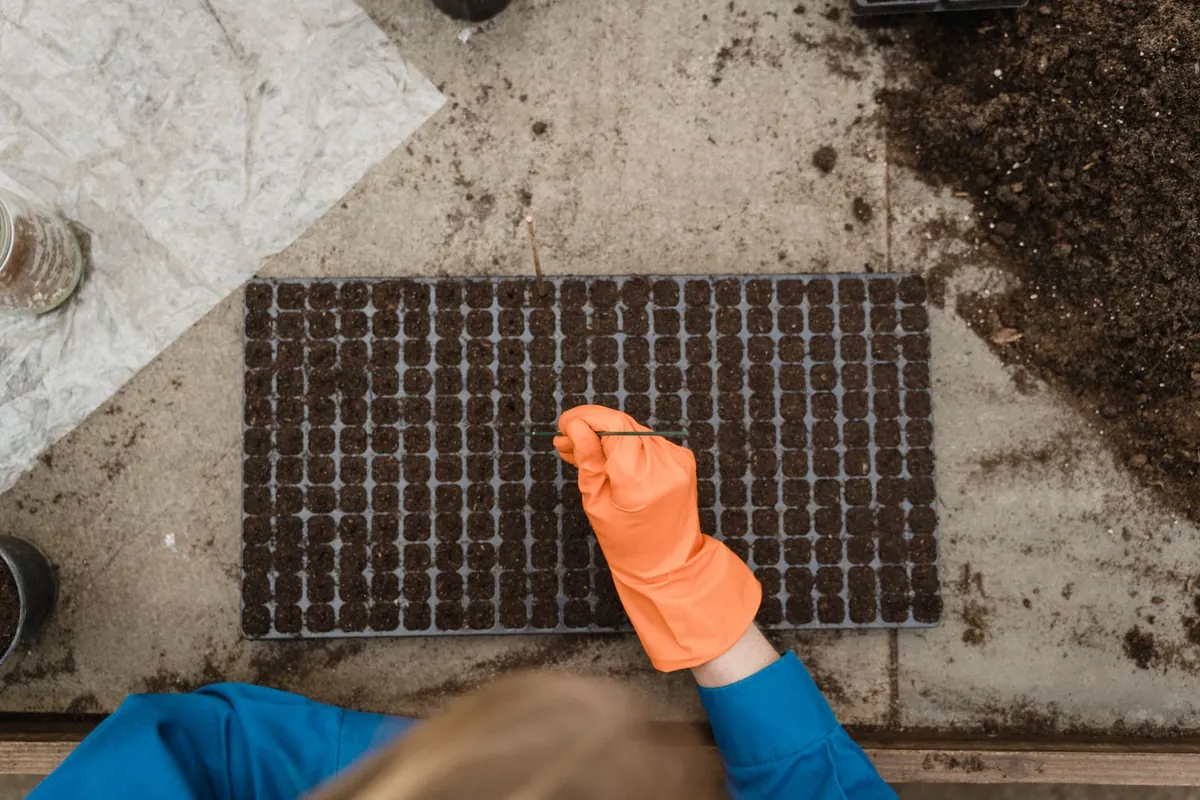
Sowing rates vary, so follow the supplier's instructions. As a guide, many meadow mixes are sown at around four to five grams per square metre, while pure wildflower seed is often lighter. Mix the seed with dry sand or vermiculite so you can see where it lands. Divide the patch into squares with canes or string, broadcast half the seed in one direction and half at right angles, then tread or roll it in. Do not bury it deeply. Seed needs light and air as much as moisture.
Late summer to early autumn is the best time to sow. The soil is still warm, rain is more reliable, and many perennial seeds need winter cold to break dormancy. Spring sowing is possible, but you will spend more time watering and fighting weeds. Yellow rattle should always go in during autumn.
In the first year, expect a scruffy patch rather than a flower show. Annual weeds will germinate, and the meadow will look thin and uncertain. Keep the weeds in check by mowing the patch to about five to seven centimetres every six to eight weeks through the growing season, removing the clippings each time. This lets light reach the young wildflowers and stops thuggish weeds from setting seed. If you have sown yellow rattle, leave it to flower and set seed before that cut, even if it means mowing around it.
Water only
Photo: Tima Miroshnichenko / Pexels
Most gardens peak in June and again in September, leaving bees and butterflies hungry in between. Here's how...
Turn a balcony or patio into a working pollinator patch with the right containers, sun, plants, and watering routine...
Copyright © 2026 The Meadow Courier. All Right Reserved.